

Last updated: September 2026
Choose a commercial contractor for franchise rollout work by testing how they run a program, not how they build one store. Ask to see the same scope template applied across several sites, a per-site and a program-level report, and one named person who owns the whole thing. Then check how they pilot, how they price repeat scopes, what their closeout package contains, and what insurance and bonding they can document. A contractor who answers with real documents is a program partner. One who answers with a brochure is not.
Why does contractor selection matter more on a rollout than on a single site?
A single-site mistake costs you one opening. A rollout mistake repeats at every site until someone catches it.
Unit counts keep climbing. The International Franchise Association projects franchise establishments will grow from 832,521 to 845,000 in 2026, an increase of roughly 12,500 units [Source: International Franchise Association 2026]. Each one is a build, remodel or refresh someone has to award.
Contractor capacity is tight at the same time. ABC's Construction Backlog Indicator stood at 8.8 months in June 2026, with the South region highest at 10.3 months [Source: ENR / Associated Builders and Contractors 2026]. A contractor with a long backlog will still say yes. The question is whether they can staff it.
What should you ask a commercial contractor for franchise rollout work about scope, staffing and markets?
Start with the questions that reveal whether the firm has run a program before.
Can they show the same scope template across multiple sites?
Ask for the scope document from a past program, then the version used at two different sites. The base scope should match line for line, with site-specific items in a marked section. If each site was scoped from scratch, you are buying one-off projects. Our multi-location rollout programs page describes what a repeatable scope covers.
Who is the single point of contact, and what do they control?
Get a name, not a department. Ask what that person can decide without escalating: schedule changes, subcontractor swaps, change orders up to a stated limit. A contact with no authority is a message relay. Our project management and trade coordination page explains what the role should own.
How do they handle multiple markets and jurisdictions?
A program across Texas, Georgia and Oklahoma runs through different permitting offices and health departments. Ask which markets they have permitted in during the last two years and how they source trades where they have no standing crew. In AGC's 2026 outlook survey, 82 percent of firms reported trouble filling hourly craft positions, and 57 percent named insufficient supply of workers or subcontractors as a top concern [Source: Associated General Contractors of America 2026]. A contractor who cannot name their trade bench in Dallas-Fort Worth, Atlanta or Oklahoma City will discover the shortage on your schedule.
How do they pilot before volume?
Ask whether they build one site first, what they measure, and what changes in the template before site two. A firm that goes straight to volume is treating your program as a sales figure.
How should a rollout contractor report, price repeat work and close out each site?
The second set tests the operating layer, where a program contractor separates from a busy general contractor.
What does their reporting look like at site level and program level?
Ask for a redacted sample of both. A per-site report shows schedule against baseline, open permits, inspection results and outstanding items. A program report rolls those into one page: sites on time, at risk and complete, with the reason for any slip.
Slippage is common. AGC and NCCER's 2026 workforce survey found 42 percent of firms reported that shortages of their own or their subcontractors' workers had delayed projects [Source: Associated General Contractors of America 2026]. You cannot prevent every delay. You can insist on seeing it the week it happens.
How do they price repeat scopes?
Ask for a fixed-package or unit price for the base scope, with site conditions priced on a separate schedule. Ask what happens to the base price after the pilot and after ten sites. A firm that reprices every site from a blank estimate is not passing repetition back to you.
What is in their closeout package?
Ask for the closeout checklist and a sample package. It should contain the signed punch list, completion photos, all warranties and manuals, and a turnover package with as-builts, permits and inspection records. Ask when it arrives relative to opening. The commercial finish-out guide explains how inspection sequencing feeds a clean turnover.
What references from multi-unit brands can they provide?
Ask for references from brands, not landlords or single-site owners. Ask each one: did the scope hold across sites, did reporting arrive on time, and would they award the next program to the same team. The third answer counts most.
What insurance and bonding should you ask for?
Request a current certificate of insurance showing general liability, workers' compensation, auto and umbrella coverage, with your brand named as additional insured. Ask for a letter from their surety confirming bonding capacity at the program value. Your legal team sets the limits. What matters is whether the contractor produces the documents without delay.
What does a rollout contractor scorecard look like?
A scorecard turns a conversation into a comparable record. Score each candidate, then compare totals and red flags.
KPMG's 2023 Global Construction Survey found 37 percent of respondents had missed budget or schedule targets due to weak risk management, and only about half of owners' projects were meeting completion deadlines [Source: KPMG 2023]. McKinsey has reported that large projects typically run 20 percent longer than scheduled and up to 80 percent over budget [Source: McKinsey 2016]. Selecting the right commercial contractor for franchise rollout work is the cheapest place to cut that risk.
| Question to ask | What a good answer looks like | Red flag |
|---|---|---|
| Show the same scope template across sites | Identical base scope, site variances in a marked section | Each site scoped from scratch |
| Who is the single point of contact? | Named person with decision authority and a stated program load | "Your PM will be assigned after award" |
| How do you handle multiple jurisdictions? | Recent permits in each target market, named trade bench per market | "We will find local trades once we start" |
| How do you pilot before volume? | One site built, measured, template revised, then volume | Wants five sites open in week one |
| How do you report? | Sample per-site and program-level reports on a fixed cadence | Reports available "on request" |
| How do you price repeat scopes? | Stable base package price, separate schedule for site conditions | Every site estimated from zero |
| What is in the closeout package? | Punch list sign-off, photos, warranties, turnover package on a set date | Closeout "handled by the site super" |
| Multi-unit brand references | Two or more brand contacts who awarded a second program | Only landlord or single-site references |
| Insurance and bonding | Current COI, additional insured, surety letter confirming capacity | Documents promised later |
Weight the scorecard for your program. A ten-site refresh in one metro tolerates a thinner multi-market answer. A forty-site program across three states does not. Staffing pressure is not easing: ABC estimates construction must attract 349,000 net new workers in 2026 and 456,000 in 2027, with most 2026 demand driven by retirements [Source: Construction Dive / Associated Builders and Contractors 2026].
How ASEL10 approaches this
ASEL10 Services runs multi-location rollout programs as its core business, so we expect these questions from any brand choosing a commercial contractor for franchise rollout work. Our process has four steps: build the template, pilot a site, roll the program, report and refine. Every program has one point of contact, repeatable scope templates and consolidated schedule and progress reporting.
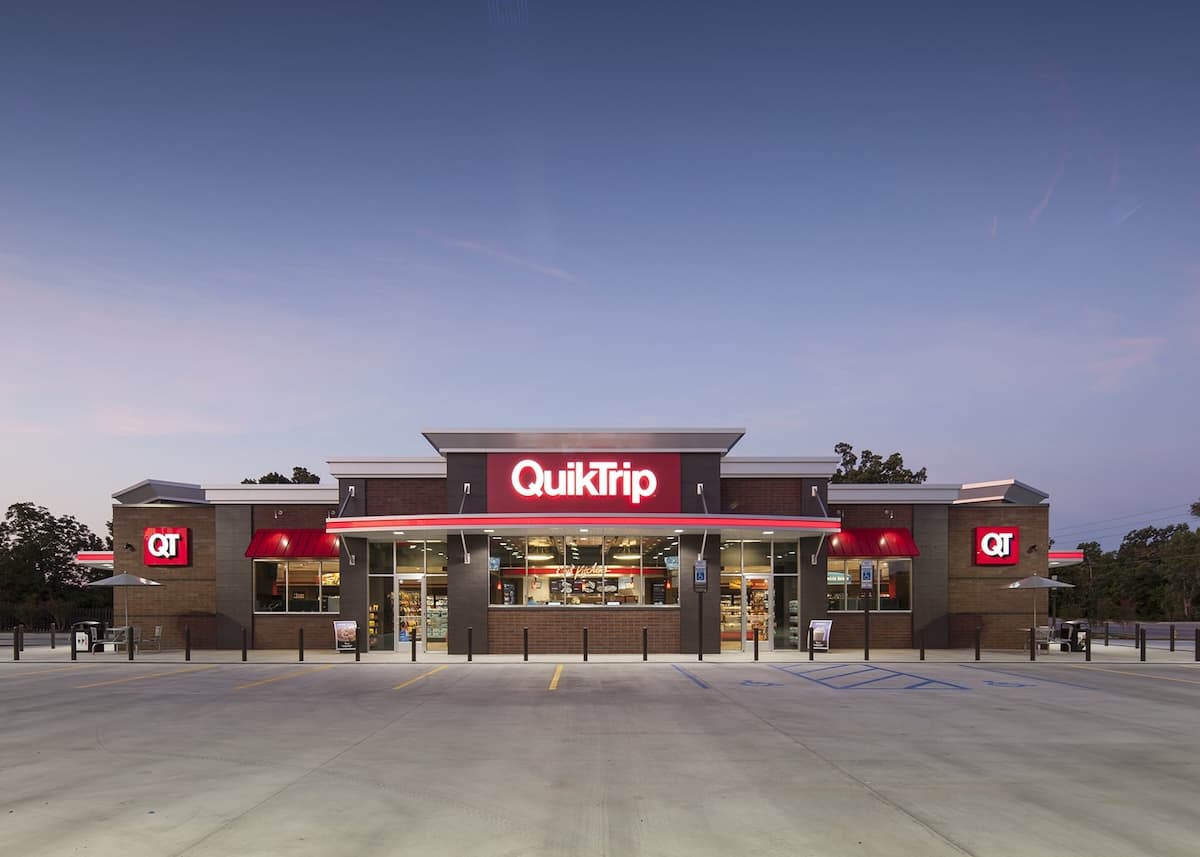
The Taco Bell restaurant rollout in Texas used the same kitchen package, finish spec and inspection gates at every location. The QuikTrip fryer and kitchen remodels ran in active stores across DFW and Atlanta, coordinating electrical, plumbing and HVAC in off-hours windows so stores kept trading. The Jiffy Lube refresh in DFW delivered a consistent updated appearance across sites.
We work in three active markets, Dallas-Fort Worth, Atlanta and Oklahoma City, and can support additional markets depending on the project. Brands in restaurants, convenience stores and retail franchise ask these questions. We would rather answer them before the award.
Frequently asked questions
Should a franchise brand use one contractor for the whole program or one per market?
One contractor per program is simpler to manage, provided the firm can staff every market you need. A single team keeps the scope template, the reporting format and the closeout package consistent. Splitting by market gives you local trade knowledge but multiplies the report formats and contacts you must reconcile. A workable middle path is one program contractor who self-performs in home markets and manages qualified local trades elsewhere. Either way, insist that one named person owns the program-level report.
How many sites should the pilot include?
One site is enough if the scope is well defined and the contractor measures it properly. The pilot tests the template, the trade sequence, the inspection path and the closeout package under real conditions. Ask the contractor to document what changed between the pilot and the revised template, then hold that version fixed for the next group of sites. A second pilot in a different market makes sense when permitting or health inspection rules differ enough to change the sequence. More than that mostly delays the program.
What insurance documents should a franchise development manager request?
Request a current certificate of insurance listing general liability, workers' compensation, commercial auto and umbrella or excess coverage. Ask that the brand and any landlord be named as additional insured where the lease requires it. For bonding, request a letter from the contractor's surety confirming single-project and aggregate capacity, and confirm they can provide performance and payment bonds at the program value if your legal team wants them. Your counsel sets the limits. The contractor's job at this stage is to produce the paperwork promptly and completely.
What should the closeout package contain for a franchise site?
A complete package includes the signed punch list, dated completion photos of each area, all equipment and finish warranties with start dates, operation and maintenance manuals, as-built drawings, and every permit and final inspection record. It should list a contact for each trade in case a warranty issue arises after opening. Ask for the package on a fixed date relative to turnover, not "after final billing." Forty sites with forty incomplete closeout binders is a facilities problem waiting to happen. Our FAQ covers turnover in more detail.
Conclusion
Awarding a program is a decision that repeats at every site. Ask for the documents, not the pitch. Score each candidate and trust the red flags.
If you are planning a program in DFW, Atlanta or Oklahoma City, we are glad to walk through this scorecard with you. Start Your Project.