Last updated: October 2026
Commercial construction in Atlanta rewards the operator who treats permitting as the first trade on the job. Two separate authorities have to say yes before a restaurant, c-store or wellness location opens: the City of Atlanta Office of Buildings issues the building permit, and the county board of health approves the food-service plan. They run on different calendars. Your open date is set by whichever one you started last.
Here is what catches multi-unit operators moving into the metro: the build behaves the same as anywhere else. The approvals do not. Atlanta is a patchwork of jurisdictions, and each county around the city runs its own kitchen plan review on its own timing. Start both tracks the week the lease is signed and the schedule holds. Start them when the drawings are "done" and you have already lost a month.
Why does commercial construction in Atlanta reward early permit work?
Because the metro is growing fast enough that review queues stay full, and the city's own process page tells you what each review cycle costs. The Atlanta region added 75,134 residents between July 2023 and July 2024, eighth among US metros for numeric growth [Source: US Census Bureau 2025]. Rooftops bring franchise brands: Georgia is listed third among the fastest-growing states for franchising in 2026, behind Texas and Florida, in a year when US franchise establishments are projected to rise from 832,521 to 845,000 [Source: International Franchise Association 2026]. Every one of those new units competes for the same reviewers as yours.
The city is transparent about the cost of a cycle. Its Department of City Planning process overview says that once a project is routed, "you can expect anywhere from 10 days to 2 weeks" for the initial agency review, and that a project needing more than three reviews may face additional fees or meetings with staff [Source: City of Atlanta Department of City Planning 2026]. A clean first submission costs one cycle; one that draws comments from Building, Zoning and the Arborist costs two or three. Early permit work is not about submitting faster. It is about submitting once.
Who issues the building permit, and who reviews the kitchen?
Two different bodies. Inside the city limits the building permit comes from the City of Atlanta Office of Buildings. The food-service plan review comes from the board of health of the county your address sits in. The city straddles Fulton and DeKalb, so two locations a few miles apart on the same city permit can answer to two different health departments.
Health-side timing is set at state level and administered county by county. Georgia's food service rules require plans and specifications to reach the health authority of the county where the establishment will be built at least fourteen business days before construction begins, and the permit application to be filed at least ten business days before the anticipated opening [Source: Georgia Department of Public Health 2015]. Fulton's own guidance is blunter: plans and equipment specifications must be submitted to Environmental Health for review and approval before construction is started [Source: Fulton County Board of Health 2026].
Your architect cannot finish the kitchen sheets until the brand's equipment package is locked, and the county will not open its review until those sheets exist. If the equipment schedule is still being negotiated when the lease is signed, the health track has not started. Read how the restaurant inspection chain is sequenced, and ask one question first: who answers the health department's comments? Kitchen designer, architect or contractor. Pick one name.
How do Fulton, DeKalb, Gwinnett and Cobb handle food-service plan review differently?
Each county board of health publishes its own submission rules and turnaround expectation. The table lists only what each authority's own page says.
| Health authority | What its own guidance states |
|---|---|
| Fulton County Board of Health | Plans and equipment specifications approved before construction starts [Source: Fulton County Board of Health 2026] |
| Gwinnett, Newton and Rockdale Health Departments | Allow 8 to 10 business days for plan review; a new facility must score 100 (A) on its opening inspection [Source: Gwinnett County Health Department 2024] |
| Cobb & Douglas Public Health | Three sets of plans at a quarter inch to the foot; allow ten working days for approval [Source: Cobb & Douglas Public Health 2013] |
| DeKalb Public Health | Runs its own review under the same state rule; its current timing and fee page could not be verified for this guide, so confirm directly before you schedule |
The stated turnarounds are all short on paper, and none includes the time you spend fixing a rejected submission. Operators building c-stores with food programs should read how convenience-store kitchens are handled across a multi-county footprint, because the same fryer package can face three different reviewers in one metro.
How should you manage trade relationships in a market with heavy franchise growth?
Treat your subcontractors as a scarce resource you book in advance, not a commodity you bid at the last minute. Georgia's construction labour market is tight: the sector added 1,100 jobs in July 2026 but was still down 3,200 over the year [Source: Georgia Department of Labor 2026].
The contractors say the same. In the Associated General Contractors' 2026 workforce survey, 62 percent of the 26 Georgia firms responding had open hourly craft positions, and of those with openings, 44 percent said filling them was harder than a year ago and 50 percent said it was as hard. Project managers and supervisors topped the hard-to-fill salaried roles, cited by 18 firms [Source: Associated General Contractors of America 2026]. The trades will show up. The question is whether anyone senior is running them.
- Book the kitchen trades against the health approval date, not the permit date. The plumber and the hood installer are the two crews the health inspector will judge.
- Repeat the same trades across locations. A crew that has built your prototype twice makes fewer mistakes on the third. This is the core argument in managing multi-location rollouts.
- Choose the bench over the bid. With brands competing for the same trades, a contractor with a standing crew in the metro protects an open date better than a lower number. That is the basis of our multi-location rollout service.
What runs in parallel in an Atlanta commercial build?
Almost everything before the building permit is issued, and very little after. The city building permit, the county health plan review, the grease interceptor decision, the sign permit and the long-lead equipment orders can all run at the same time, provided someone owns each one. The city's own process shows why the front end is where you gain time: the completeness check on a new application is typically done within 48 hours, and the Office of Buildings runs an Express Permits division whose over-the-counter reviews for qualifying projects are designed to be completed within 30 minutes [Source: City of Atlanta 311 2026]. The city moves quickly on complete packages; the round trip on incomplete ones is the slow part.
- Week the lease is signed: confirm the county health jurisdiction, research zoning overlays, and lock the equipment schedule with the brand.
- As soon as drawings are stamped: submit the building permit to the city and the food-service plan to the county the same week.
- During review: order the hood, walk-in and custom millwork. A long-lead item ordered when the space is "ready for it" is already late.
- At permit issue: mobilise with the rough-in trades scheduled against the health approval. MEP coordination is where most Atlanta finish-outs either hold or lose their date.
Ground-up construction adds site, stormwater and traffic reviews to the front of that list. A tenant finish-out in an existing shell skips most of them, which is the strongest argument for second-generation space when a brand needs an Atlanta location open quickly.
How ASEL10 approaches this
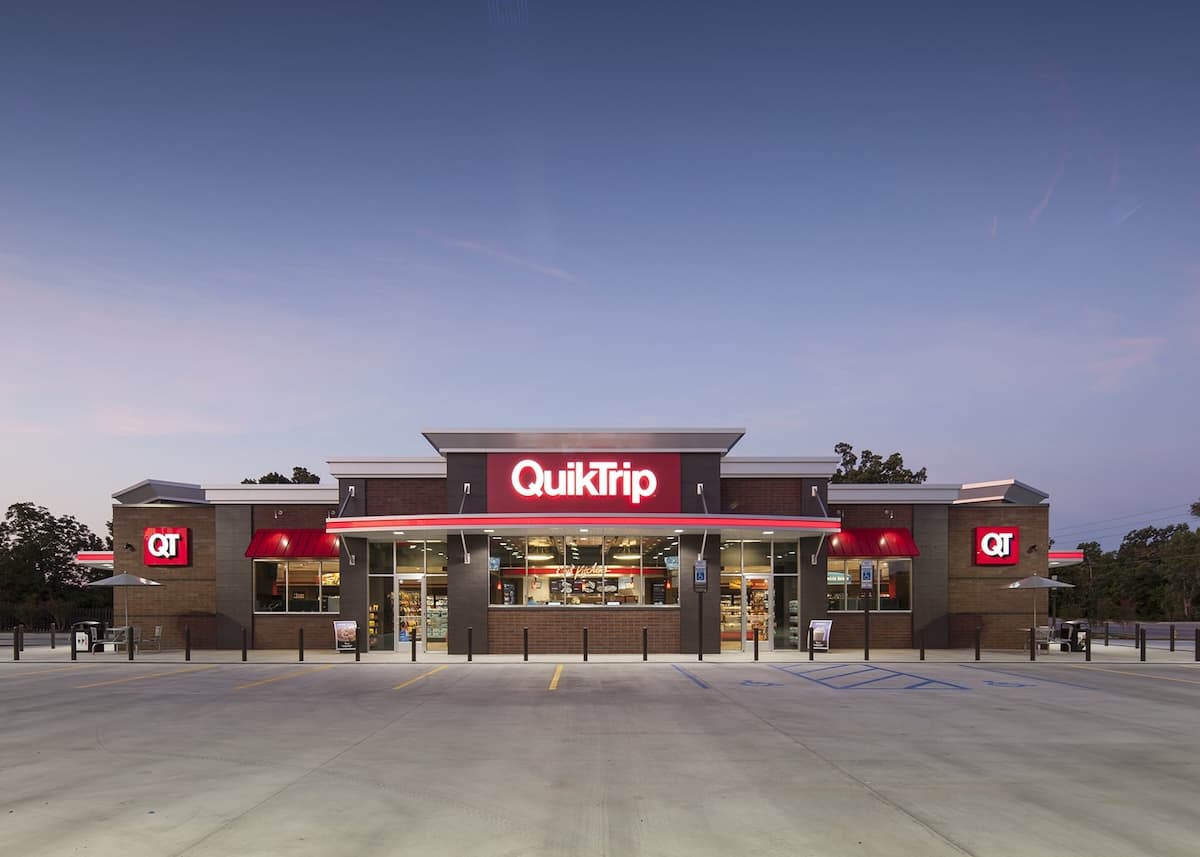
We run three markets, and commercial construction in Atlanta is where the jurisdiction map matters most. On the QuikTrip program we have delivered fryer and kitchen remodels in active stores across both DFW and Atlanta, in off-hours windows so the store never closes. The Atlanta stores taught us to confirm the county health office and the city building department separately for every address before a drawing is issued. The QuikTrip rollout case study has the detail.
The Taco Bell program set the other habit: the same kitchen package, finish spec and inspection gates at every Texas location. When a brand brings a prototype into metro Atlanta, we hold the package fixed and adjust only the jurisdictional layer around it; the Taco Bell case study covers how. Across 20+ years and 200+ projects the pattern has held: the schedule is won or lost before mobilisation, and our project management work in the metro is mostly tracking two approval calendars.
Frequently asked questions
Do I need a separate health permit for every Atlanta location?
Yes. Georgia food-service permits are issued per establishment by the county board of health, and they are not transferable between owners or locations. Each new unit needs its own plan review, permit application and opening inspection, even when the kitchen is identical to one approved a few miles away. If your rollout crosses from Fulton into DeKalb, Gwinnett or Cobb, expect a different reviewer, a different application packet and a different fee schedule. Budget the review as a per-location line item, not a one-off.
Can construction start before the county approves the kitchen plan?
Not the kitchen. Georgia's rules require plans to reach the county health authority at least fourteen business days before construction begins, and Fulton's guidance is that plans must be approved before construction starts. Demolition can often proceed under the building permit while the health review is open, but any work that fixes the position of sinks, equipment or floor drains is at risk until approval lands. Building a kitchen ahead of approval is a bet that the reviewer will not ask you to move anything. They usually do.
Is a second-generation restaurant space faster to permit in Atlanta?
Usually, but only if the previous use was genuinely similar. A former restaurant with a hood, grease interceptor and three-compartment sink in place means the county review becomes an existing-establishment review rather than a new one, and the building review carries fewer structural questions. The savings vanish if the previous tenant's equipment does not match your brand's package, because you are then documenting removals and replacements in both submissions. Walk the space with your kitchen designer before signing, and ask for the last approved health plan.
How many jurisdictions should a metro Atlanta rollout plan for?
More than you expect. A ten-unit program across the metro can touch the City of Atlanta plus several suburban cities for building permits, and Fulton, DeKalb, Gwinnett and Cobb for health review. Build a jurisdiction matrix before site selection is finished, so each address is tagged with its building authority and its health authority the day the letter of intent is signed. Operators who do this run locations in parallel. Operators who discover the matrix one at a time run them in series.
The two-calendar test
Before you sign off on an open date, ask for two dates, not one: the day the building permit package goes in, and the day the county health plan goes in. If the second date is blank, or reads "after permit", the schedule is a guess. If both fall in the same week and both submissions are named to a person who answers the comments, the plan is real.
Commercial construction in Atlanta does not punish operators for building slowly. It punishes them for starting the approvals late and then building fast to make up the difference. The permit work has to start early because it is the only part of the schedule a good crew cannot recover for you. If you want the two calendars built before the lease clock starts, Start Your Project.