Last updated: October 2026
Commercial construction Dallas-Fort Worth wide is not one market with one set of rules. The City of Dallas, the City of Fort Worth and every suburb between them run their own building department, adopted codes and review clock, so identical finish-out drawings move at different speeds ten miles apart. Operators who open on time treat each city as its own jurisdiction, start the upstream approvals before the building permit, and book trades early because regional growth has made crews the scarce resource.
You signed a lease in a northern suburb, another in Fort Worth, a third inside the Dallas city limits, and the brand wants all three open the same quarter. The drawings are identical. The schedules will not be.
What makes commercial construction Dallas-Fort Worth different from a single-city market?
The Metroplex is a patchwork of independent cities, each permitting and inspecting on its own terms. The regional council of governments covers a 16-county area with more than 230 member governments [Source: NCTCOG 2026], and there is no shared permit desk between them.
The growth is uneven. The Dallas-Fort Worth-Arlington metro added 123,557 residents between July 2024 and July 2025, the second-largest numeric gain of any U.S. metro [Source: U.S. Census Bureau 2026]. Four of the nation's five fastest-growing cities of 20,000 or more residents are DFW suburbs, led by Celina at 24.6 percent in one year, while Fort Worth posted the largest numeric gain of any U.S. city at 19,512 [Source: U.S. Census Bureau 2026].
The suburbs your customers are moving to are the suburbs whose building departments are absorbing the most new applications, and your schedule inherits that queue. A multi-site program here is a set of parallel single-city projects: the rollout standards stay constant, the permit strategy is rebuilt for every address.
How does permitting differ between the City of Dallas, the City of Fort Worth and the suburbs?
The two core cities publish their own review targets and sell their own expedited tracks; each suburb sets its own, so read that city's own page before promising a date. The state sets a backstop: a Texas municipality must grant or deny a building permit, or explain in writing why it cannot, no later than the 45th day after the application is submitted [Source: Texas Local Government Code 2026].
Fort Worth publishes a target of 7 business days to first review comments on a commercial building permit [Source: City of Fort Worth 2026]. Its X Team returns full comments in 5 business days, with a meeting within a week and the chance to issue the permit in one sitting, for a $500 fee per permit plus $1,125 per hour of review [Source: City of Fort Worth 2026].
Dallas frames the process as steps. Its commercial quick guide lists a two-week scheduling window for the optional pre-development meeting, a five-day turnaround for prescreen and intake, and a second Q-Team track offering same-day, appointment-based review for minor interior renovations and finish-outs [Source: City of Dallas 2023]. The Q-Team is paid: standard fees apply, plus an intake fee from $500 for projects under 10,000 square feet and $1,000 per hour of plan review, booked at least five days ahead [Source: City of Dallas 2026].
The expedited track is a purchase that only pays off if the drawings are complete enough to close comments in the room.
| Jurisdiction | Published first-review target | Paid expedited track | Confirm before committing a date |
|---|---|---|---|
| City of Dallas | Five-day prescreen, then review by discipline | Q-Team, same-day goal; finish-out track | Whether your scope qualifies for the finish-out track |
| City of Fort Worth | 7 business days to first comments | X Team, 5 business days, meeting within a week | Whether fire, water or urban forestry reviews are triggered |
| Suburban cities | Set by each city | Varies; some have none | Code edition and current queue, from that city's own page |
| State backstop (all) | Grant, deny or explain in writing by day 45 | Not applicable | That your submission date is documented |
Nobody fabricates a Dallas review time; they fabricate a suburban one by assuming it matches the core city next door.
Which approvals run in parallel, and what should you start first?
Start the approvals upstream of the building permit, because most can run at the same time and a late one holds everything else. Fort Worth says so: some reviews in its development process can be accomplished in parallel with others, and its pre-development conference is scheduled four to six weeks from receipt of a complete application [Source: City of Fort Worth 2025]. On a change of use, a grease interceptor or a drive-through, that is the cheapest six weeks you will spend.
- Zoning and use verification first. Confirm the use is permitted before design money is spent. In Fort Worth a change of use is its own permit, with or without remodelling.
- Utility and civil questions alongside design. Water and sewer capacity, grease and backflow do not wait for the architect.
- Fire in its own lane. Fort Worth publishes 3 to 5 business days for most fire permits, so fire is rarely the long pole, but it cannot start until the fire drawings exist.
- Building permit before trade permits. In Fort Worth the building permit must be issued before a trade permit can be applied for [Source: City of Fort Worth 2026]. Electrical, mechanical and plumbing follow; they do not lead.
- Long-lead equipment ordered on the permit date, not the mobilisation date.
The MEP coordination work holds this together, because the utility and fire answers both change the mechanical set. An approval you can start today and choose to start next month is already late.
How do inspections actually work across the Metroplex?
Each city inspects its own permits with its own crews, scheduling rules and cut-offs. Dallas made that concrete this year: effective 1 June 2026, all commercial projects must schedule plumbing and mechanical rough inspections together on the same day, and the finals must also be scheduled together [Source: City of Dallas 2026]. That is a scheduling rule, not a code change, but it moves your critical path: a mechanical rough a day behind plumbing no longer costs a day, it costs both inspections.
Fire inspections in Fort Worth are listed at 2 to 5 business days, and building inspection requests received by 5 a.m. go on that day's list, with anything not completed placed first the following day [Source: City of Fort Worth 2025]. A 5 a.m. cut-off rewards the site that calls in the night before.
What differs city to city is which department owns each inspection and how you request it. Restaurants add a health layer, covered in the restaurant inspection sequence, which shapes how a restaurant build-out is phased. Ask any bidder: who requests inspections, and by when? Not which trade is responsible, which named person calls it in.
What do DFW growth and construction backlog do to trade availability?
The region's largest projects now bid against your finish-out for the same electricians. Mining, logging and construction employment in the Dallas-Fort Worth-Arlington metro stood at 268,200 in March 2026, up 1.8 percent over the year [Source: BLS 2026], against a regional unemployment rate of 3.9 percent [Source: Federal Reserve Bank of Dallas 2026].
In the 2026 AGC and NCCER workforce survey, 87 percent of firms reported openings for hourly craft workers, 88 percent of those said the positions were as hard or harder to fill than a year earlier, and 42 percent said worker shortages had delayed projects [Source: AGC 2026]. Texas has its own version: the Dallas Fed reports the state's data-centre building boom is producing shortages of concrete workers and electricians, quoting one contractor paying $28 to $32 an hour for skilled concrete labour while data-centre projects offered $45 an hour plus a $150 per diem [Source: Federal Reserve Bank of Dallas 2026].
On a finish-out this shows up as a sub who priced the job in April and cannot staff it in July. Lock trade commitments at permit submission, not permit issuance. Favour subs that already run crews in that specific city, because they know its inspectors and cut-offs. As with every open-date driver in a finish-out, the schedule is only as real as the crew behind it.
How ASEL10 approaches this
ASEL10 builds tenant finish-outs, commercial remodels and multi-location rollouts across Dallas-Fort Worth, Atlanta and Oklahoma City, and for commercial construction Dallas-Fort Worth wide the first move on any site is to confirm which city owns the address and what that city requires this month.
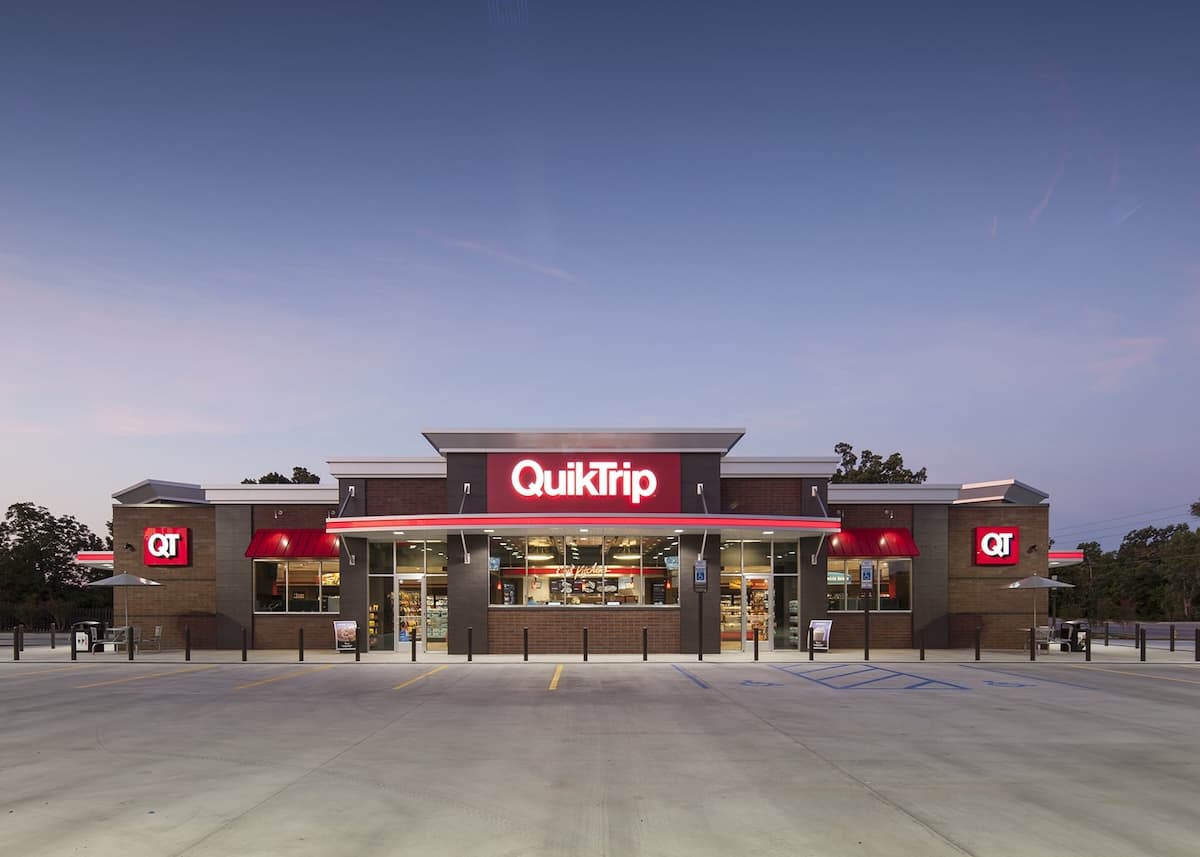
On the Taco Bell program, that means the same kitchen package, finish specification and inspection gates at every Texas location, applied on top of whatever the local jurisdiction adds. The brand standard is fixed; the permit path is rebuilt per city. On the QuikTrip fryer and kitchen remodels, the work ran in active stores across DFW and Atlanta in off-hours windows; in that kind of convenience-store remodel, a missed inspection call is a lost night, not a lost day.
Over 20+ years and 200+ projects across three markets, the pattern has held: the schedule is won at intake, not at framing. ASEL10's project management role on a program is owning the permit response in each city, keeping trade commitments real, and reporting the two together so a brand construction manager sees one schedule rather than three excuses.
Frequently asked questions
Is it faster to permit a finish-out in Dallas or in Fort Worth?
Neither is reliably faster; they measure different things. Fort Worth publishes a 7-business-day target for first comments on a commercial building permit, while Dallas publishes step-level targets such as a five-day prescreen turnaround and a same-day Q-Team track for qualifying finish-outs. Both paid expedited tracks only help if your drawings are complete enough to close comments in the meeting. The honest comparison is between your submittal quality in each city, not between the cities, and the state's 45-day rule applies to both.
Do suburban cities follow the Dallas or Fort Worth review times?
No. Every incorporated city in the region is its own permitting jurisdiction with its own adopted code edition, fee schedule, review targets and inspection rules, and none is bound by a neighbouring city's figures. Read the specific city's development-services page, ask its intake desk what the current queue looks like, and document your submission date so the state's 45-day backstop is enforceable. Assuming a suburb matches the core city next door is the most common scheduling error in commercial construction Dallas-Fort Worth wide.
Should I pay for expedited plan review?
Pay for it when the rent clock is running and your drawings are genuinely complete, with civil, zoning, MEP and fire questions already answered. Dallas charges $1,000 per hour plus an intake fee; Fort Worth charges $500 per permit plus $1,125 per hour. Both are built to issue a permit in one sitting, which makes the meeting a test of your design team, not a shortcut around it. If the set still has open coordination items, the money buys a faster list of corrections. Fix the drawings, then buy the meeting.
The clock you can actually control
There are three clocks on every Metroplex site: the city's review clock, the trades' availability clock, and the rent clock. You control none directly. What you control is how complete the submittal is on day one, how early the upstream approvals start, and how firmly the trades are committed.
Here is the test. For each city on your list, can you name the person who owns the permit response, the date the application was accepted, the inspection cut-off time, and the crew that will be on site the week the permit issues? If any of the four is blank, that is the location that will be late. To start with those blanks filled in, talk to the Dallas-Fort Worth team. Start Your Project.