Last updated: September 2026
A convenience store remodel can run without closing the store. The work is split into zones, each zone gets its own window, and the fuel island and point of sale stay live throughout. Kitchen and fryer work happens overnight behind temporary walls, and each zone is cleaned and inspected before the doors open. The trade-off is a longer calendar and a stricter daily routine.
This guide covers which zones get which windows, what stays live, and where the risks sit.
Why can't a convenience store close for a remodel?
Because the revenue a closed store loses does not come back. Fuel customers go to the competitor across the intersection, and some do not return.
NACS reports that an average fuel-selling store serves around 1,100 customers per day, and the average visit takes 3 minutes and 33 seconds from car door to car door [Source: NACS 2025]. In 2025, prepared food and dispensed beverages were 28.5% of in-store sales but 38.9% of in-store gross profit dollars [Source: NACS 2026].
A dark fryer for two weeks costs more than a dark aisle.
How do you phase a convenience store remodel while the store stays open?
You split the store into zones, keep no two customer-facing zones down at once, and give each zone a window that matches its traffic.
Census data puts private commercial construction spending at a $116.2 billion seasonally adjusted annual rate in July 2026, about 4.7% below July 2025 [Source: U.S. Census Bureau 2026]. A softer market makes night crews easier to book.
A typical phasing plan for a store that keeps trading:
| Zone | Typical work window | What stays live | Key risk |
|---|---|---|---|
| Front of house (sales floor, coolers, checkout) | Overnight, 10 p.m. to 5 a.m., in halves | One register lane, cooler doors, coffee | Dust on open product, blocked egress |
| Kitchen and fryer line | Overnight after last food service, 3 to 5 nights | Cold holding, hand sinks, hot case if isolated | Cross-contamination, hood and suppression offline |
| Restrooms | Daytime, one restroom at a time | Second restroom or portable unit | ADA path blocked, plumbing shutoff affecting kitchen |
| Fuel island and canopy | Daytime, half the dispensers at a time | Remaining dispensers, tank monitoring, POS | Dispenser power loss, UST compliance gap |
| Electrical service and panels | Single overnight shutdown, 2 to 4 hours | Generator-fed coolers, alarm, tank monitor | Cooler temperature, lost transaction data |
Each row gets its own daily checklist. That checklist is what makes the plan portable across a multi-location rollout program.
How do you keep the fuel island and POS live during construction?
You treat the fuel system as a live utility, not part of the job site. Nothing on it is touched without the fuel contractor present.
NACS counts 122,620 fuel-selling stores, 80.7% of all U.S. convenience stores and the highest count in eight years [Source: NACS 2026]. Federal rules under 40 CFR 280.36 require a walkthrough of spill prevention and release detection equipment every 30 days, with records kept for one year [Source: EPA 2026]. A remodel does not pause that clock.
In Texas, TCEQ requires Class A and Class B operators to complete approved training every three years, and every facility must keep a signed list of trained Class C operators [Source: TCEQ 2026]. The contractor confirms who the operator is on day one and copies them on every shutdown notice.
Canopy and dispenser work runs by halves, so half the positions always pump. Power interruptions to dispensers or the tank monitor are scheduled, announced and tested back before the crew leaves. The POS network gets a circuit check before any panel work. A register that cannot authorise cards closes the store faster than any wall.
How do you keep food safety intact during kitchen and fryer work?
You seal the work area behind a full-height temporary wall, protect every food-contact surface, and sanitise the zone before the first prep each morning.
As of 2024, 46 state agencies in 36 states had adopted one of the three most recent editions, covering 64.64% of the U.S. population [Source: FDA 2024]. The local health department sets the checklist.
Fryer swaps are the common case. The sequence is fixed: suppression verified offline, old unit out, gas and electrical adjusted, new unit set, nozzles re-aimed, gas pressure tested, hood and suppression back in service. Nothing fries until the suppression contractor signs. Our MEP coordination basics post covers this sequencing.
Zip walls stop visible dust. A HEPA scrubber exhausting outside stops the fine dust that settles on prep tables. Both come down and go back up every shift.
What happens overnight, and how is the store cleared to open each morning?
Overnight is when the disruptive work happens. Morning is when the store proves it is safe to trade, through a defined handoff to the store manager.
Texas has 16,504 convenience stores, the most of any state, and Georgia has 7,092 [Source: NACS 2026]. Across a chain, the overnight routine has to be identical, because nobody can supervise every site every night.
A typical window has five steps. Staff close the zone and pull product. The crew sets walls and dust control, then works. Electrical shutdowns happen mid-window, with the alarm company and fuel contractor notified in advance. The crew cleans, restores egress and re-lamps. Then a walk-through with the manager checks power, cooler temperatures, hood, water, restrooms and exits before opening.
Rough-in, suppression and final inspections are scheduled into the daytime when the zone can be shown, so an inspector never holds up an opening. Our commercial finish-out guide covers the closed-store version.
What makes a convenience store remodel repeatable across many stores?
A per-store survey before design, one scope template at every site, and one accountable team reporting on all of them. A convenience store remodel program fails when every store is treated as a new project.
The 2026 NACS count found 151,975 convenience stores in the U.S., and 63% of them belong to operators with 10 or fewer stores [Source: NACS 2026]. One brand can hold a dozen panel layouts, hood types and slab conditions.
The survey catches those differences before they become change orders. It records panel capacity, gas meter size, hood and suppression model, grease trap location, restroom fixture count and the tank monitoring console. It also records the store's quietest window.
From there the template does the work. The same kitchen package, finish spec and inspection gates apply at every site, the approach used on the Taco Bell restaurant rollout. Per-store changes are documented as deviations, not redesigned. We cover this in managing multi-location rollouts.
How ASEL10 approaches this
ASEL10 runs convenience store construction as a program, not one-off jobs. The process is the same across every rollout: build the template, pilot a site, roll the program, report and refine.
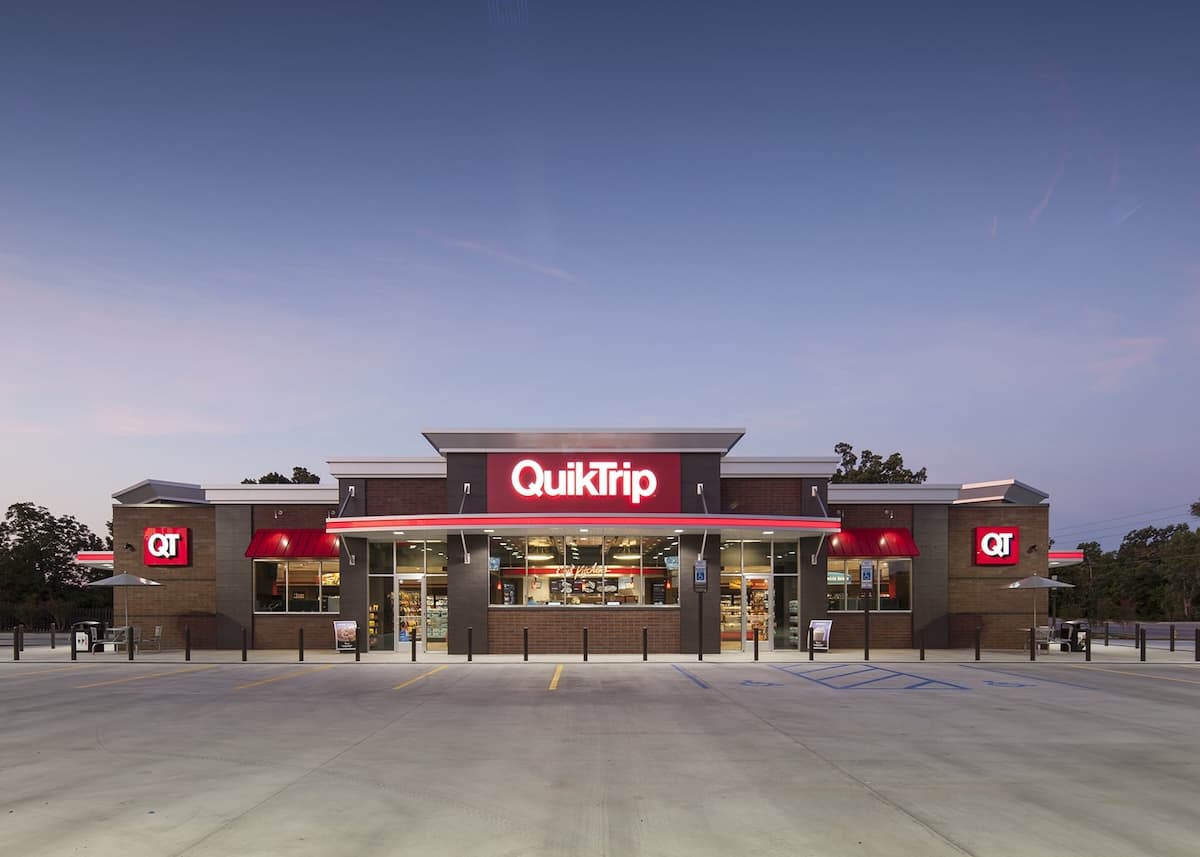
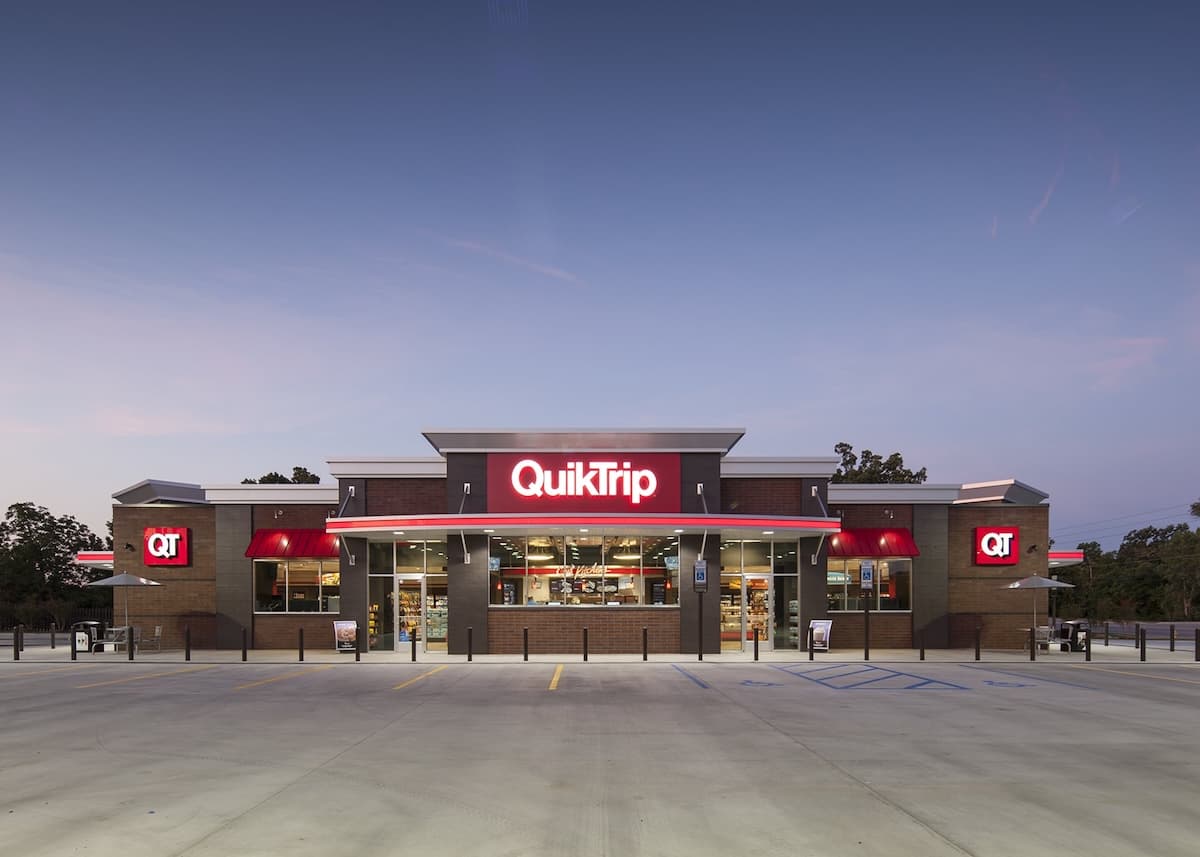
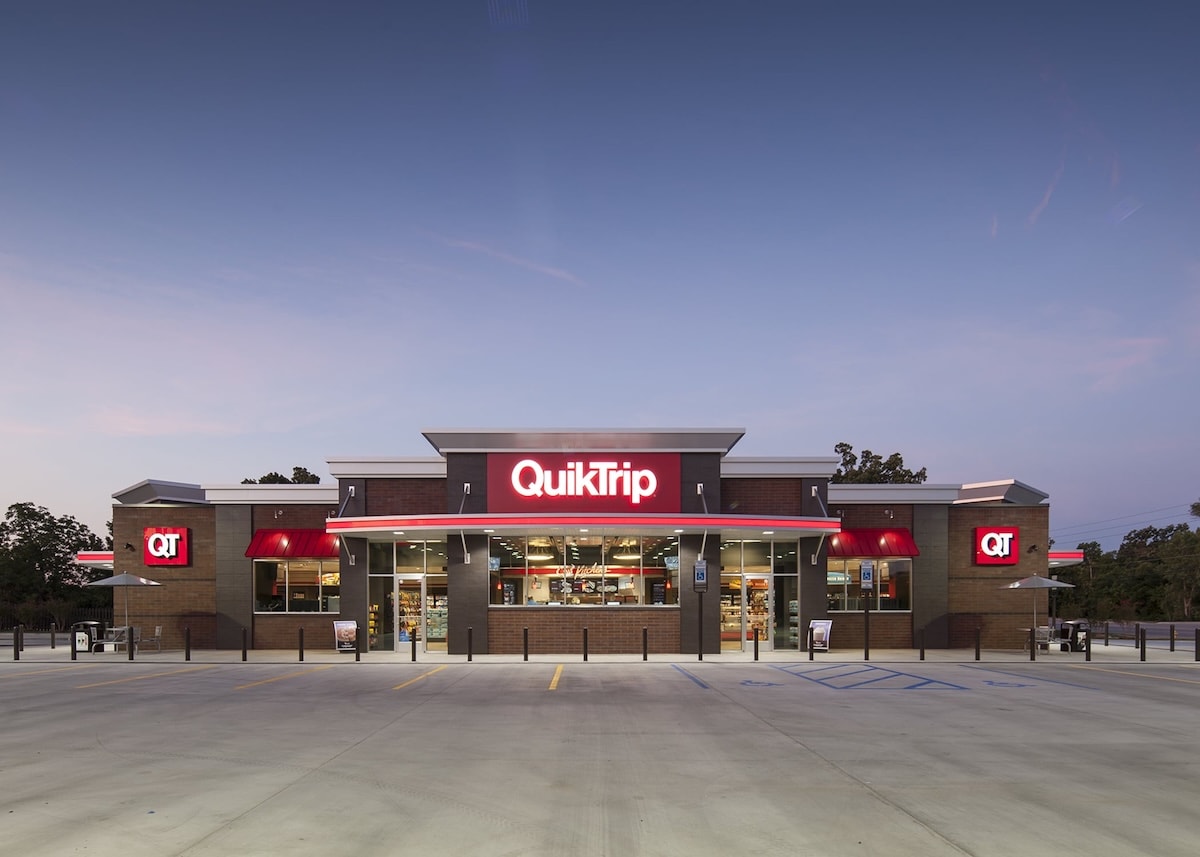
The QuikTrip program is the live example. ASEL10 completed fryer and kitchen remodels in active stores across Dallas-Fort Worth and Atlanta, coordinating electrical, plumbing and HVAC trades inside off-hours windows so every store kept trading. One point of contact managed the schedule, with consolidated progress reporting across sites.
The same structure carries into the Jiffy Lube refresh across DFW and into commercial remodels for operators who cannot close. Coordination is the deliverable. Closeout at each store includes a punch list, completion photos, warranties and a turnover package.
Active markets are Dallas-Fort Worth, Atlanta and Oklahoma City. Additional markets can be supported depending on the project.
Frequently asked questions
How long does a convenience store remodel take when the store stays open?
Longer than a closed remodel, because the work is limited to a nightly window and split by zone. A closed store can run trades in parallel for 12 hours a day. An open store may get six or seven productive hours overnight, with an hour lost to setup and another to cleanup. The calendar stretches, but the store never loses a day of sales. The duration depends on scope, store hours and how many zones are in play. A pre-construction survey is the only reliable way to set the number for a site.
Can the kitchen serve food during a fryer replacement?
Usually a limited menu, yes. The fryer line is offline while the hood and suppression system are out of service, and nothing cooks under that hood until the suppression contractor signs it back in. Cold holding, hot case, roller grill and dispensed beverages can continue if they sit outside the sealed zone and were not exposed to dust. The local health department has the final word, so the sequence is agreed with them before the first night. Product is pulled, surfaces are covered, and everything is sanitised before the morning open.
Who is responsible for fuel system compliance during construction?
The store's designated tank operator, not the general contractor. Federal and state UST rules assign compliance to the owner and operator, and the 30-day walkthrough requirement does not pause during a remodel. The contractor's job is to protect the system: no unplanned power interruptions to dispensers or the tank monitor, no excavation near product lines without the fuel contractor present, and written notice before any shutdown. On a well-run job the operator, the fuel contractor and the general contractor share one schedule and one contact list.
What should a facilities manager ask a contractor before an open-store remodel?
Ask for the phasing plan by zone, the dust-control method, the electrical shutdown procedure and the morning handoff checklist. Ask who is on site overnight with authority to make decisions, and how progress is reported across stores. Ask how deviations from the scope template are documented. Then ask for a store the contractor has kept trading through similar work. Answers should be specific and operational. If they are not, the store finds out at 5 a.m. on the first morning. More is in our FAQ.
Next steps
An open-store remodel is a scheduling problem before it is a construction problem. Get the survey, the zone plan and the morning checklist right. If you are planning work across active stores, Start Your Project and we will scope the program with you.