Last updated: October 2026
A franchise remodel program is the brand-wide effort to bring dozens of existing stores up to the current image without shutting them. It runs on a per-store survey, a tiered scope, a phasing plan that keeps each store trading, and a closeout check that proves every location landed on the same standard. The construction is the easy part. The program is the hard part.
Here is what catches most brands the first time: a prototype is drawn once, for a store that does not exist. A reimage is forty arguments between that drawing and forty buildings never built to receive it. The adaptation is the real work.
What is a franchise remodel program, and how is it different from a rollout?
A rollout builds new stores to one standard. A remodel program rebuilds existing stores to a new standard, and every one arrives with a history you did not choose.
The numbers explain why reimage work is where the money goes. The International Franchise Association expects franchise establishments to grow from 832,521 to 845,000 units in 2026, roughly 12,000 new locations against more than 830,000 that already exist [Source: IFA 2026]. The installed base dwarfs the pipeline, so the image customers see is mostly the image of stores built eight or twelve years ago.
For definitions, read what a multi-location construction rollout actually is; for scoring the builder, read how to choose a contractor for a franchise rollout. This post stays on the reimage side: stores you already have, trading you cannot interrupt, one standard hit forty times.
How do you adapt one prototype to forty different existing stores?
You do not adapt the prototype. You adapt each store to it and write down what gave way. The prototype stays fixed; the per-store drawing set records every deviation and who approved it.
Geography makes this harder. FRANdata reports the Southeast holds nearly 30% of all U.S. franchise establishments, with the Southwest growing fastest at 2.5% [Source: FRANdata 2026]. A brand with stores across Dallas-Fort Worth, Atlanta and Oklahoma City faces three permitting cultures and three pools of trades, and the prototype knows nothing about any of them.
The tool is a deviation register with three columns: what the prototype calls for, what the store can physically take, and the approved substitute, answered in writing before the store is scheduled. A deviation discovered on site is a change order; one discovered in the survey is a line item.
What are the scope tiers in a remodel program: light refresh vs full reimage?
Most programs settle on three tiers, and the tier decides whether the store closes, how deep the survey goes, and what closeout has to prove. Deciding it per store, rather than applying one scope to all forty, keeps the budget honest.
The lift is real. Franchise Times reported a 6 to 7 percent revenue bump after McDonald's remodels and 10 to 15 percent for Burger King [Source: Franchise Times 2020]. Burger King completed 370 remodels in 2024, reached 51% of its U.S. system modernised, and targets 85% by 2028 [Source: Restaurant Dive 2025].
| Tier | What changes | Does the store close? | Survey depth | Closeout proof |
|---|---|---|---|---|
| Light refresh | Paint, graphics, signage, lighting swaps, fixtures and seating | No. Night and off-hours work | Visual walk and photo set | Brand photo checklist |
| Mid-tier reimage | Plus millwork, flooring, restroom finishes, front-counter reconfiguration | Partial. Zones close in sequence | Measured survey plus MEP capacity check | Punch list, photo set, as-built markups |
| Full reimage | Plus kitchen or bay layout, storefront, HVAC and electrical upgrades | Usually a short closure inside a phased plan | Full existing-conditions set, code review, structural check | Inspection sign-offs, commissioning, as-builts, brand audit |
What does the per-store survey need to capture?
The survey is where the program is won or lost, because it is the only point where a deviation is still cheap. Forty identical survey reports mean nobody surveyed anything.
ICSC reported retail construction costs rising from around $80 per square foot before the pandemic to about $120 per square foot [Source: ICSC 2024]. At those rates, scope the prototype demands but the store does not need is the most expensive thing on the job. Only the survey can tell you which is which. It records:
- Electrical service and panel capacity. The panel as it is today, not the original drawing.
- Landlord and lease constraints. What the storefront, roof and signage rules allow.
- Trading pattern. Peak days and hours, so phasing can be built around them.
The team that runs the survey should be the team that prices the store. Our commercial remodel work starts with that walk.
How do you phase a remodel so the store keeps trading?
You split the store into zones, close one zone at a time, and do the noisy and dusty work when the store is shut. The store never loses its front door, registers and restrooms at once.
Speed per store is achievable when the scope is disciplined. When Jersey Mike's refreshed its system, it spent an average of $75,000 per store, one franchisee's restaurants took about five days each, and every location had the new look within 18 months [Source: Franchising.com 2026]. That pace needs a survey that has already removed the surprises.
Trading through a build is covered in the post on remodelling a convenience store while it stays open. What changes in a franchise remodel program is repetition: the phasing plan is written once, tested on the first two stores, then locked and reused. A crew that phases store 14 the way it phased store 3 is faster and safer.
How do you sequence forty stores in waves?
You do not start forty stores. You start three, learn, then run waves of six to ten with a fixed gap between them. The first wave exists to break the plan where it is weak.
The alternative is a program that stalls. Restaurant Dive reported that only about half of Subway's U.S. franchisees had completed the brand's remodel program as of 2023, six years after launch, and that the current program carries a minimum cost of $100,000 per store [Source: Restaurant Dive 2025]. A program run on individual franchisee timing rather than scheduled waves looks like that: half done, indefinitely.
Market capacity sets the wave size. The Census Bureau put private nonresidential construction at a seasonally adjusted annual rate of $738.7 billion in May 2026, with total spending 1.5 percent below the same month a year earlier [Source: Census 2026]. A softer market does not mean one electrical sub can carry ten stores at once. Group waves by geography, not by franchisee, because crews and inspectors are local. Put the hardest stores in wave two, while there is still time to adjust. The multi-location rollout discipline of one crew, one sequence, one reporting format is what makes wave four look like wave one.
Who pays for a franchise remodel program: the franchisee or the franchisor?
In most systems the franchisee pays, because the remodel obligation sits in the franchise agreement and triggers at a renewal, a transfer or a set anniversary. The franchisor sets the standard, approves the drawings and may offer incentives, but the capital usually comes from the operator.
That is why timing and scope matter. The IFA and FRANdata's annual franchisee survey found 87% of franchisees experiencing a moderate to substantial impact from inflationary pressures, with managing costs the biggest challenge named [Source: IFA 2024]. A mandate landing on an operator already squeezed on margin is where programs turn into disputes.
The builder's job is to make the number real early: a per-store price built from the survey, split by tier, deviations listed, so a franchisee can take a firm figure to a lender. The post on who pays for a tenant improvement allowance covers the landlord side of the money. Here the answer is in the agreement. Read it before you scope it.
What does a consistency check at closeout look like?
Closeout checks the store against the prototype, not the drawings. A store can match its approved drawings and still miss the brand, because of a deviation allowed once that should not have been.
The stakes compound in multi-unit systems. FRANdata reports that 19.3% of franchisees operate multiple units and collectively control 58.8% of all franchised locations [Source: FRANdata 2026]. One operator's habit, unchecked at closeout, repeats across a large share of the system. Catching it on store 12 is why stores 13 through 40 do not repeat it.
The package carries a photo set from fixed positions, the signed deviation register, inspection sign-offs, as-builts and a brand audit against the prototype's element list. The project management layer owns it, and the same person signs every one. Forty stores closed out by forty people is forty standards.
How ASEL10 approaches this
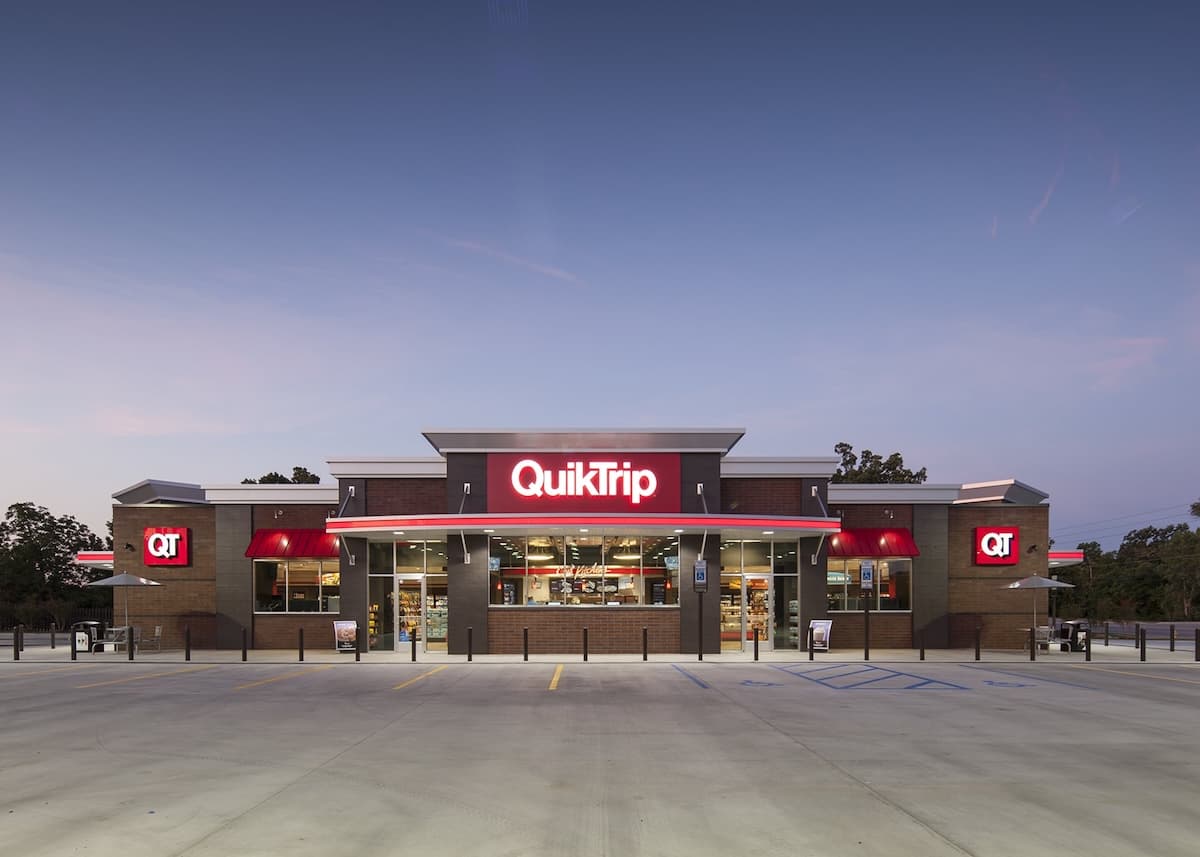
We run reimage programs the way we run rollouts: one standard, repeated. On the Jiffy Lube refresh across DFW stores, the discipline was consistency, the same refresh executed the same way in each location so the brand reads identically everywhere; the Jiffy Lube case study has the detail. QuikTrip's fryer and kitchen remodels ran in active stores across DFW and Atlanta in off-hours windows, phasing at its most demanding, as the QuikTrip rollout case study describes. Dirty Dough's Southlake store is the new-build side of the same logic.
Across 20+ years and 200+ projects in three markets, the pattern holds: the survey is done by the people who will build, deviations are signed before scheduling, waves are sized with the trades, and one person signs every closeout. That is the service behind our retail and franchise construction work.
Frequently asked questions
How long should a franchise remodel program take across forty stores?
It depends on the tier mix and the number of markets, so distrust any single figure. The honest answer is to run the first wave and measure it. Three stores in wave one will tell you the real duration per store, the gap needed for closeout, and how many stores a local trade base can carry at once. From there the duration is arithmetic, not a guess. What stretches programs is rarely construction time. It is unsurveyed stores, franchisees without funding in place, and permit responses nobody owns. Fix those three and the schedule mostly holds.
Can a full reimage really be done without closing the store?
Often, but not always, and the survey decides it. A light or mid-tier reimage can almost always be phased around trading using zone closures and off-hours work. A full reimage that touches the kitchen line, the electrical service or the storefront usually needs a short closure inside the phased plan, because some work cannot be made safe with customers present. The goal is to make that closure as short as possible, outside peak days, and identical from store to store so the franchisee knows what to expect.
What happens when a store cannot physically take the prototype?
You record the deviation, propose a substitute that preserves the brand intent, and get it approved in writing by the franchisor before the store is scheduled. This is the deviation register described above, the most valuable document in the program. Common cases are ceiling heights, landlord restrictions on storefronts and signage, undersized electrical services, and structural limits on where fixtures can hang. None of these are problems if found in the survey. All of them are change orders if found on site.
The forty-store test
Take the prototype and the survey for one store, and ask the builder to walk you through every point where the two disagree, the substitute, who approved it, and what it costs. If the answer is a list, the program is real. If the answer is "we will sort it on site", you are about to fund forty change orders and call it a schedule. Planning a reimage across DFW, Atlanta or Oklahoma City? Start Your Project.