Last updated: November 2026
A commercial construction punch list is the final list of small items that still need finishing or correcting after the work is substantially complete. It should be short, specific and closed within days. When it runs long, the opening date slips, the final payment stalls, and the store opens with crews still on site. The fix is to walk the work early and often, not once at the end.
Most punch lists do not go wrong at the walkthrough. They go wrong in the eight weeks before it, when nobody was checking finish work as it went in.
What is a commercial construction punch list?
It is the list of remaining items between substantial completion and final completion. Substantial completion is a defined contract stage, not a feeling on site.
The standard AIA A201-2017 contract defines substantial completion as the stage when the work is "sufficiently complete" in accordance with the contract documents "so that Owner can occupy or utilize the Work for its intended use." Courts have described a punch list as "a final list of small items requiring completion, or finishing, corrective or remedial work" [Source: Saul Ewing LLP, AIA A201-2017].
That definition matters. If an item stops the space from being used for its purpose, it is not a punch item. It is unfinished work, and it belongs on the schedule, not the list.
| Item | Punch item? | Why |
|---|---|---|
| Scuffed paint on a back-of-house wall | Yes | Cosmetic. The space can operate. |
| Missing cover plate on an outlet | Yes | Small, fast, does not stop use. |
| Walk-in cooler not holding temperature | No | The kitchen cannot open. This is incomplete work. |
| Failed fire alarm final | No | No certificate of occupancy. The store cannot open. |
| Ceiling tile stained during rough-in | Yes | Replace before turnover. |
Why do punch lists delay commercial openings?
Because a long list is really a quality problem that was deferred to the end. Every item found at the final walk is an item that was missed during the work.
The cost of finding problems late is well documented. Research by PlanGrid and FMI estimated that rework caused by poor communication and bad project data cost the U.S. construction industry more than $31 billion in 2018. The same study found team members spend more than 14 hours a week on rework, conflict resolution and searching for information [Source: PlanGrid and FMI 2018].
On a tenant finish-out, that rework lands in the worst possible window. Fixtures are set. Merchandise or equipment is arriving. Staff training is booked. A two-hundred-item punch list at that stage means trades working around a store that is trying to open.
Three patterns cause most long lists:
- Finish trades stacked into the last two weeks. Paint, flooring, millwork and ceiling grid all compete for the same floor at once, and damage each other.
- No interim inspections. The superintendent walks the job daily but nobody walks it against the finish standard until the end.
- A brand standard nobody on site has read. Franchise and corporate brands have prototype specs. If the punch is written against the plans alone, the brand walk finds a second list.
How does the punch list affect retainage and final payment?
Retainage is the portion of each payment held back until the job is done. The punch list is usually what stands between the contractor and that money, so it shapes behavior on both sides.
On private projects in Texas, the Property Code requires owners to withhold 10 percent of the contract price as statutory retainage, generally until 30 days after the work is completed [Source: Levelset, Tex. Prop. Code §53.101]. Other states and many contracts set their own terms, so the contract governs the details.
The practical effect is simple. A punch list that drags for six weeks keeps a meaningful sum unpaid, and subcontractors who are owed money are slow to return for small items. That turns a three-day list into a month.
The answer is not to release retainage early. It is to keep the list short enough that it closes before anyone has a reason to stop showing up.
How do you keep a commercial construction punch list short?
Walk the work in stages and close items as you go. A punch list should be the last check, not the first.
The approach that works on multi-site programs is the same one that works on a single store:
| Stage | What gets walked | Who walks it |
|---|---|---|
| Before close-in | In-wall blocking, rough-in locations, backing for fixtures and signage | Superintendent with the brand or owner rep |
| Before ceiling grid closes | Above-ceiling MEP, fire sprinkler heads, access panel locations | Superintendent and MEP trades |
| Room by room as finishes complete | Paint, flooring, millwork, trim against the brand standard | Superintendent |
| Pre-punch | Whole space, internal list closed before the owner walk | GC team |
| Owner or brand walk | Formal punch list, signed | Owner, brand rep, GC |
The pre-punch is the step most often skipped. A contractor that walks its own work first, and closes what it finds, hands the owner a list of real exceptions instead of a list of everything.
Photos with locations, a single shared list, a named owner for each item and a target close date keep the list honest. Industry rework data shows why: the hours lost to searching for information are hours not spent closing items [Source: PlanGrid and FMI 2018].
What should a punch list item include?
Enough that anyone can find it, fix it and prove it was fixed. A vague item is an item that comes back.
- Location. Room, wall, grid line. "North wall of sales floor, 4 feet from the door" beats "sales floor."
- The defect. What is wrong, stated plainly.
- The standard. The drawing, spec section or brand standard it fails.
- Responsible trade. One name, not "GC."
- Photo before and after. The after photo closes the item.
- Due date. Tied to the opening date, not open-ended.
Contract language backs this up. Under the AIA definition, the test for each item is whether the owner can still "occupy or utilize the Work for its intended use" [Source: Saul Ewing LLP, AIA A201-2017]. Writing the standard into the item stops arguments about whether it is really done.
How is a punch list different on a multi-location rollout?
On a rollout, the punch list is also a feedback loop. The same item showing up at store three and store seven is a process problem, not a site problem.
Brands running programs across several markets should track punch items by category across every site. If millwork damage appears on every list, the fix is protection and sequencing in the next store's schedule. If the same fixture backing is missed, the fix is in the prototype drawings. Industry research on rework points to the same root cause: information that does not reach the people doing the work [Source: PlanGrid and FMI 2018].
That is the difference between closing a punch list and shrinking the next one. Read how this works across a program in managing a multi-location rollout without losing the standard and how a brand reimages forty stores without closing one.
How ASEL10 handles closeout
ASEL10 builds tenant finish-outs, remodels and multi-site programs for franchise and corporate brands across Dallas-Fort Worth, Atlanta and Oklahoma City. The same team that runs the schedule runs the closeout, so the punch list is owned by the people who know the work.
- Tenant finish-outs and commercial remodels walked in stages, not once at the end.
- Multi-location rollouts where punch data from one store feeds the next.
- Project management with one accountable point of contact through final completion.
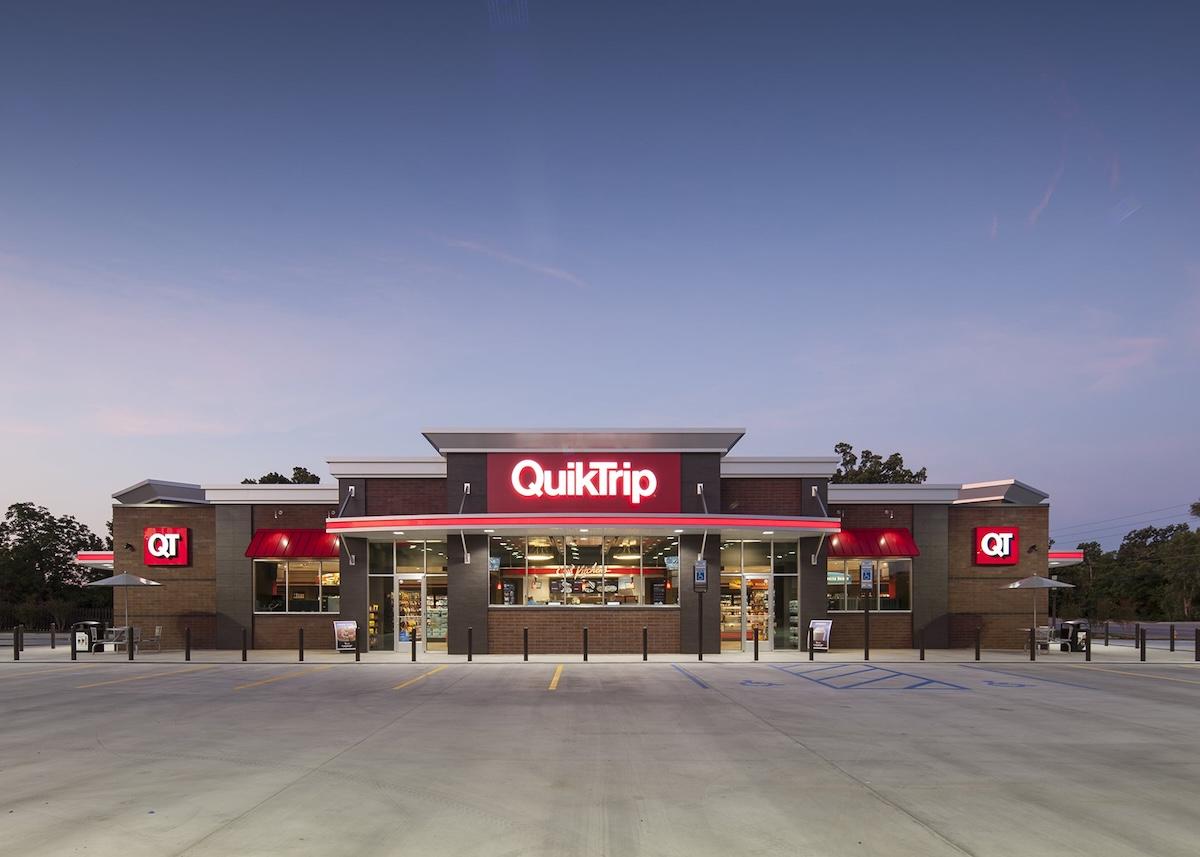
- Brand work for QuikTrip, Taco Bell and Jiffy Lube, where opening on the brand's standard is the job.
For restaurant and food-service spaces, punch work has to land around inspections. See how restaurant build-out inspections are sequenced and our restaurant construction work.
Frequently asked questions
When should the punch list walkthrough happen?
The formal walk happens when the contractor believes the work is substantially complete, meaning the space can be used for its intended purpose. On a commercial finish-out that is usually after major inspections pass and before fixtures and stock arrive. Schedule it with enough time to close items before the opening date. A walk the day before opening leaves no room to fix anything. Most brands benefit from a contractor pre-punch a few days earlier, so the formal walk finds exceptions rather than the whole job.
Who creates the punch list?
Usually the owner or the owner's representative, often with the architect, writes the formal list during the walkthrough. The general contractor should already have walked the space and closed its own internal list first. On franchise projects the brand's construction manager may run a separate walk against the prototype standard. One combined list with a single owner for each item is far easier to close than three separate lists from three different people.
How long should it take to close a punch list?
There is no universal number, and contracts often set the period. The practical goal is to close every item before the store opens to customers. Small cosmetic items should take days, not weeks. If items stay open for more than a couple of weeks, the cause is usually access, materials on back order or subcontractors who have moved on to other jobs. Tracking each item with a due date and responsible trade makes that visible early.
Is the punch list the same as final completion?
No. Substantial completion starts the punch list. Final completion comes after every item is closed, closeout documents are delivered and final payment, including retainage, is released. Closeout documents commonly include warranties, operation manuals, as-built drawings and lien releases. A project can sit between those two stages for a long time if the list is long or the paperwork is late.
The short version
A commercial construction punch list should confirm that the work is done, not discover what was missed. Walk early, walk in stages, write items that anyone can close, and own the list with one accountable team. That is how a store opens on the date it was promised.
Planning a finish-out, remodel or multi-site program? Start your project and tell us your open date.