Last updated: November 2026
Commercial construction interest rates are the biggest drag on new projects in Dallas-Fort Worth right now. Money costs more and lenders are pickier, so fewer projects start. Materials are not getting cheaper either: key input prices are up sharply over the past year. What is soft is demand, and that changes how smart operators should plan a finish-out, remodel or new build in 2026.
The short read: the projects that still pencil are the ones that control cost and time, because every extra month is a month of interest.
Where are commercial construction interest rates in late 2026?
Higher than most operators planned for, and not falling soon. The Federal Reserve held the federal funds target range at 3-3/4 to 4 percent at its October 28, 2026 meeting. Two voting members dissented in favor of a rate increase, not a cut [Source: Federal Reserve 2026].
Construction loans usually price off short-term rates, so the policy rate flows straight into the cost of carrying a project. Dallas-area lenders are feeling it. The Dallas Fed's October Beige Book reported that "credit standards and terms tightened, and loan pricing increased," with bankers citing "the increase in the federal funds rate" [Source: Federal Reserve Bank of Dallas 2026].
For a brand opening new locations, that means two things. Financing costs more per month, and approval takes more documentation. Both reward a tighter schedule.
Are construction material prices going down?
Not on the national data. Input prices for nonresidential construction rose 11.9 percent from September 2025 to September 2026, the largest increase in four years [Source: AGC 2026].
| Input | Change, Sept 2025 to Sept 2026 |
|---|---|
| All inputs to nonresidential construction | +11.9% |
| Steel mill products | +27.6% |
| Aluminum mill shapes | +25.2% |
| Copper and brass mill shapes | +30.0% |
| Diesel fuel | +115.2% |
Source: Associated General Contractors of America analysis of Producer Price Index data, October 2026.
Some materials do sit unused on slow sites, and local yards may move stock at a discount. That is real on the ground. But it is not the trend in the price indexes, and it should not be budgeted as one. The Dallas Fed also reported builders' margins "under pressure from rising materials and labor costs" [Source: Federal Reserve Bank of Dallas 2026].
Metals matter most for commercial work. Steel framing, ductwork, electrical wire and copper piping all carry the increase into a finish-out budget.
Why is commercial construction slowing down?
Because the cost of money is stopping projects before they start. Fewer owners can make the numbers work at today's rates and today's input prices.
The national figures show the slowdown. Spending on commercial construction ran at a seasonally adjusted annual rate of $122.9 billion in September 2026, down 4.0 percent from a year earlier. Total construction spending fell 2.7 percent over the same period [Source: U.S. Census Bureau 2026].
New starts tell the same story. Commercial construction starts fell 18.4 percent in September from the month before, according to Dodge Construction Network data [Source: Construction Dive, Dodge Construction Network 2026].
Not every sector is weak. The Dallas Fed noted apartment demand "remained solid" and office leasing "concentrated in top-tier assets" [Source: Federal Reserve Bank of Dallas 2026]. Build-to-rent and well-located retail are still moving. Speculative work is not.
How do high interest rates change a commercial construction budget?
They make time a line item. On a financed project, every month between closing and opening is a month of interest with no revenue against it.
That shifts where the money goes. A slower schedule used to cost labor and general conditions. Now it also costs carry. The Federal Reserve's hold at 3-3/4 to 4 percent means there is no near-term relief to wait for [Source: Federal Reserve 2026].
| Budget pressure | What it means in 2026 | What controls it |
|---|---|---|
| Interest carry | Every month of delay costs more than it did two years ago | Schedule certainty, early permit work |
| Metals and MEP | Steel, copper and aluminum inputs up 25 to 30 percent | Early pricing, long-lead procurement |
| Fuel and delivery | Diesel more than doubled in a year | Fewer trips, consolidated deliveries |
| Contingency | Less room for change orders | Complete drawings before bidding |
The input-cost data above comes from the AGC analysis of producer prices [Source: AGC 2026].
Is a finish-out or remodel a better bet than ground-up construction right now?
Often, yes. Reusing an existing building shortens the schedule, which cuts interest carry, and it avoids most site work.
Ground-up projects carry the longest financing period and the most exposure to steel and concrete. A tenant finish-out or remodel of an existing box carries less of both. With commercial spending down 4.0 percent year over year, there is also more existing space to choose from in many markets [Source: U.S. Census Bureau 2026].
That is not a rule. Some brands need a pad site, a drive-thru or a fuel canopy that no existing building offers. The trade-offs are laid out in ground-up construction vs a finish-out, and the lease side in who pays for a commercial finish-out.
What should operators expanding in Dallas-Fort Worth do now?
Plan for today's rates, not hoped-for cuts, and spend effort on the things that shorten the schedule.
- Start permits early. DFW cities each run their own review. See how permits and inspections work in Dallas-Fort Worth.
- Price metals-heavy scope first. MEP, structural steel and storefront are where input prices moved most.
- Order long-lead equipment at award. Waiting on permits to order equipment adds months of carry.
- Finish the drawings before bidding. Change orders hurt more when contingency is thin.
- Use a soft market well. Soft demand makes it hard for contractors to raise bids, according to AGC [Source: AGC 2026]. Crews and subcontractors are easier to schedule than in a boom.
The same logic applies in Atlanta and Oklahoma City, where financing follows the same national rate. Local permit timelines differ; see commercial construction in Atlanta and commercial construction in Oklahoma City.
How ASEL10 helps brands build in a high-rate market
ASEL10 is a commercial general contractor based in Dallas-Fort Worth, with active markets in Atlanta and Oklahoma City. Our work is built around schedule certainty, which matters more when every month carries interest.
- Tenant finish-outs and commercial remodels that reuse existing space.
- Ground-up construction when the site requires it.
- Multi-location rollouts for brands opening several stores across markets.
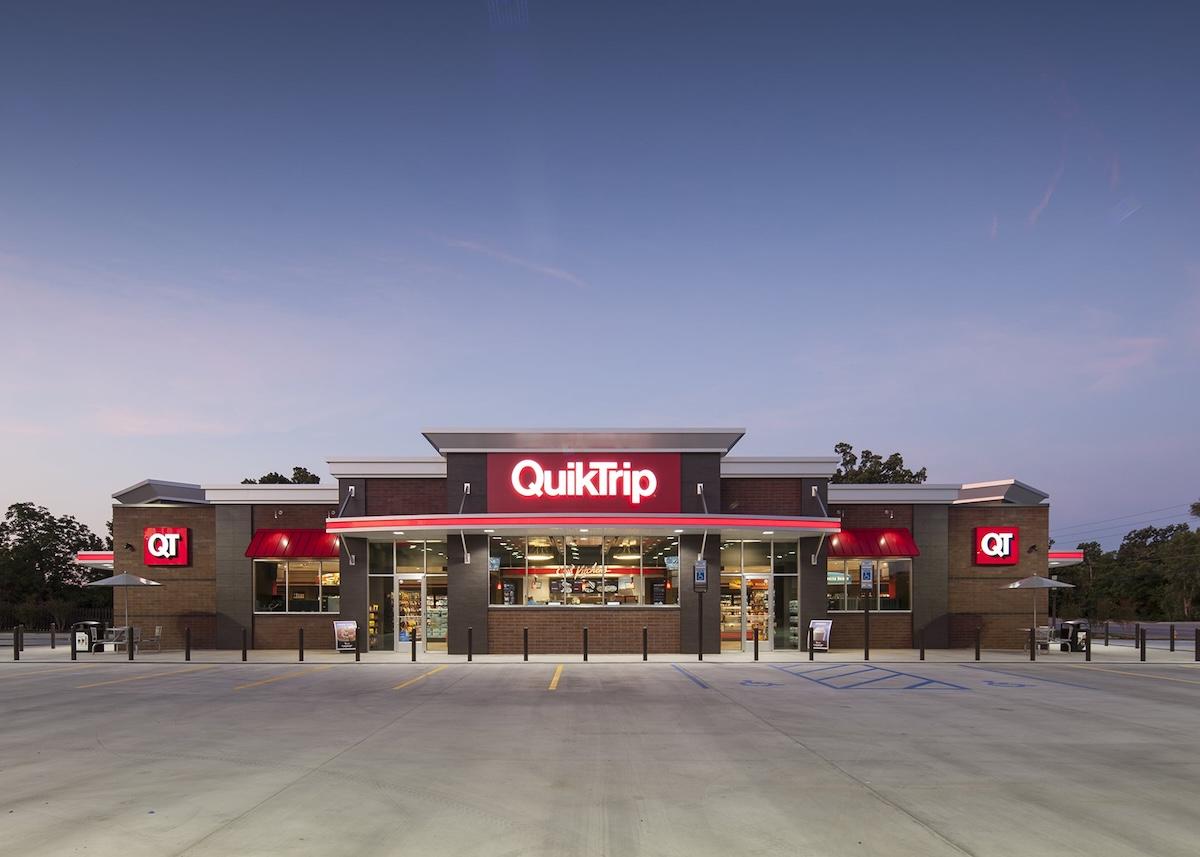
- Delivered programs for QuikTrip, Taco Bell and Jiffy Lube.
Frequently asked questions
Will interest rates come down in 2027?
Nobody can promise that, and budgets should not assume it. At its October 2026 meeting the Federal Reserve held its target range at 3-3/4 to 4 percent, and two voting members preferred an increase. That is not a signal of near-term cuts. The safer plan is to underwrite projects at current rates and treat any future cut as upside. Projects that only work if rates fall are the ones most at risk of stalling partway through financing.
Why are my construction bids not lower if the market is slow?
Because demand and costs are moving in different directions. Demand is soft, which normally pushes prices down. But the inputs contractors buy, especially steel, copper, aluminum and diesel, rose sharply over the past year according to AGC's analysis of producer price data. Contractors cannot absorb those increases for long. What a slow market does offer is better scheduling: crews and subcontractors are easier to book, which helps hold an open date.
Does a shorter schedule really save money?
On a financed project, yes. Interest accrues from the first draw until the business opens and starts producing revenue. Cutting weeks out of permitting, procurement and inspections cuts weeks of carry. It also reduces general conditions such as supervision, temporary facilities and equipment rental. For a brand opening several locations, a shorter schedule at each site compounds across the program.
Is now a good time to build in Dallas-Fort Worth?
It depends on the project. Higher rates and input costs make marginal projects harder to justify. But a slower market also means more available space, more available crews and less competition for subcontractors. Operators with a proven unit, solid financing and a clear site plan can use that to open on schedule while others wait. The deciding factor is usually whether the numbers work at today's rate, not tomorrow's.
The short version
Commercial construction interest rates are high, input prices are up and demand is soft. The projects that work in 2026 are the ones that control the calendar. Start permits early, price the metals first, order equipment at award and choose a contractor that treats the open date as the deliverable.
Weighing a new location in DFW, Atlanta or Oklahoma City? Start your project and we will walk the schedule with you.